Question
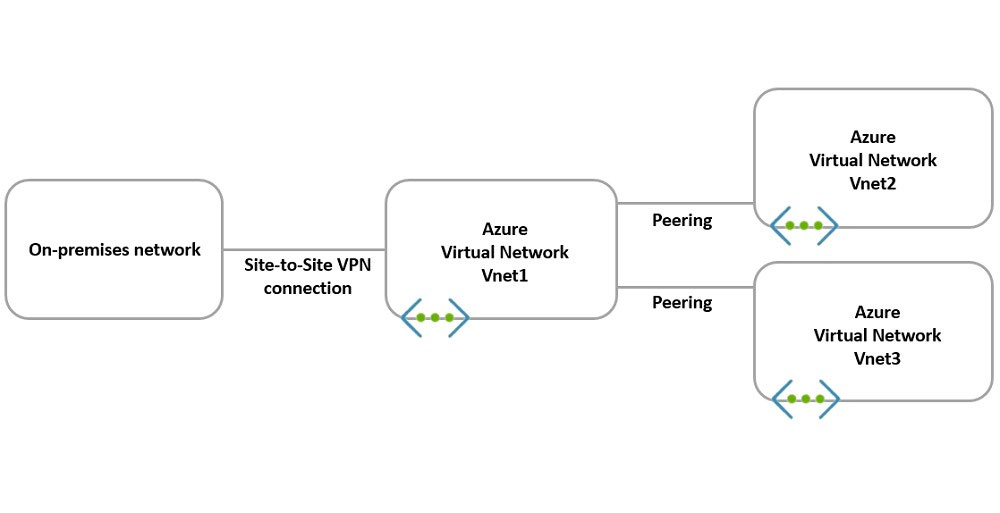
You have the hybrid network shown in the Network Diagram exhibit.
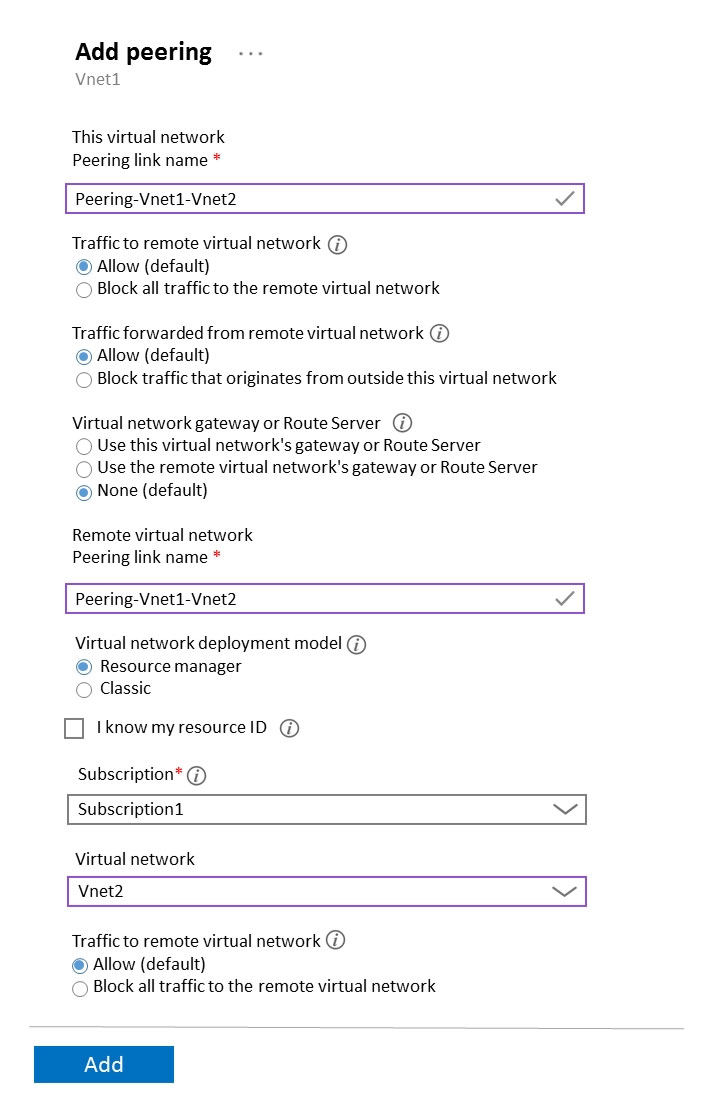
You have a peering connection between Vnet1 and Vnet2 as shown in the Peering-Vnet1-Vnet2 exhibit.
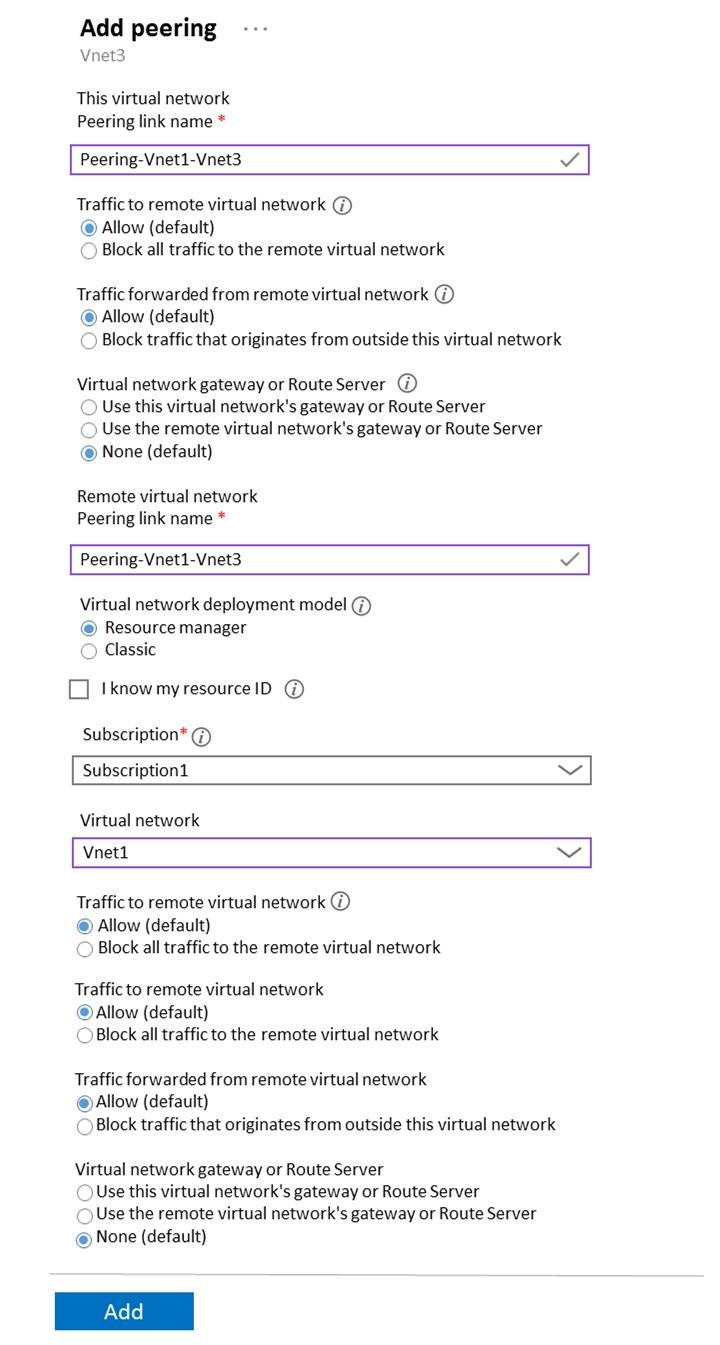
You have a peering connection between Vnet1 and Vnet3 as shown in the Peering-Vnet1-Vnet3 exhibit.
For each of the following statements, select Yes if the statement is true. Otherwise, select No.
NOTE: Each correct selection is worth one point.
Explanation
Statement 1 (Yes): Vnet1 and Vnet2 are directly peered and traffic to the remote virtual network is set to Allow on both sides, so their resources can communicate. Statement 2 (No): Vnet2 and Vnet3 are each peered only to Vnet1, and peering is not transitive, so without a direct peering or an NVA/route in the hub there is no path between them. Statement 3 (No): the Vnet1-Vnet2 peering has the gateway setting at None, so Vnet1 does not offer gateway transit and Vnet2 does not use the remote gateway; Vnet2 therefore learns no routes to the on-premises network over the Site-to-Site VPN.
