Question
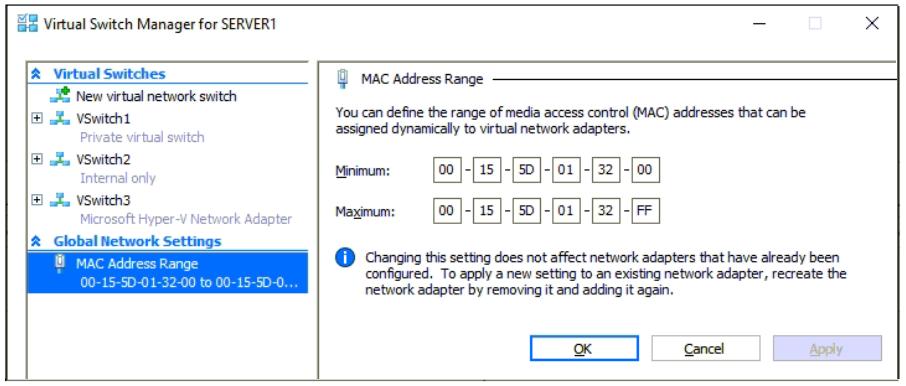
You have a server named Server1 that runs Windows Server. Server1 has a single network interface and the Hyper-V virtual switches shown in the following exhibit.
Use the drop-down menus to select the answer choice that completes each statement based on the information presented in the graphic.
NOTE: Each correct selection is worth one point.
Explanation
On Server1, you can create additional private and internal virtual switches only. An external virtual switch must bind to a physical network adapter, and Server1's only network interface is already bound to the external switch VSwitch3, so no further external switch can be created. Internal and private switches do not use a physical adapter, so more of either type can be created. Each new internal switch simply adds another virtual network adapter to the management operating system.
Server1 can access network shares on virtual machines that are connected to VSwitch2 or VSwitch3 only. VSwitch2 is an internal switch, which provides networking between the host and its virtual machines. VSwitch3 is an external switch shared with the management operating system, so the host and the VMs on it are on the same network. VSwitch1 is a private switch, which connects virtual machines only to each other and gives no connectivity to the host, so Server1 cannot reach shares on VMs that use only VSwitch1.
