Question
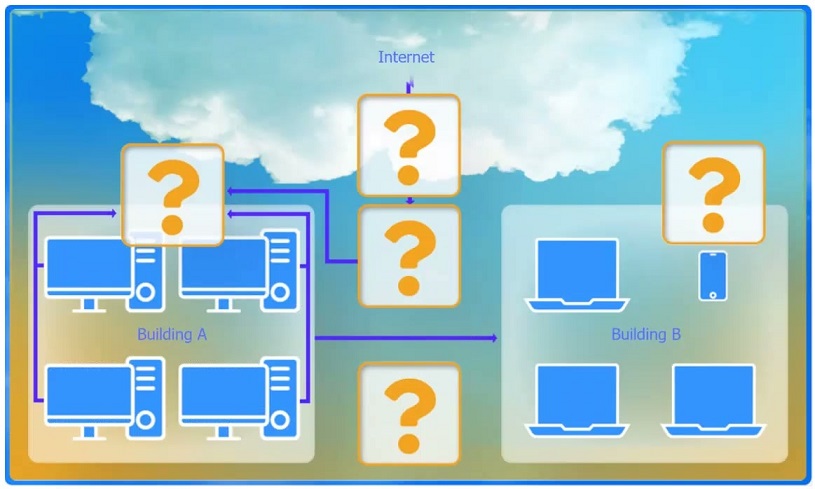
A network administrator has been tasked with configuring a network for a new corporate office. The office consists of two buildings, separated by 50 feet with no physical connectivity. The configuration must meet the following requirements:
- Devices in both buildings should be able to access the Internet.
- Security insists that all Internet traffic be inspected before entering the network.
- Desktops should not see traffic destined for other devices.
Select the appropriate network device for each location in the exhibit. Not all devices will be used, but all locations should be filled.
Explanation
A firewall at the point where the office meets the Internet inspects all Internet traffic before any of it enters the network, which is the security requirement. The router behind it is the gateway for the internal network and connects to Building A. The desktops in Building A connect to a switch, which forwards each frame only to the port of its destination, unlike a hub, which repeats every frame to every port and would let desktops see other devices' traffic. Building B has no cabling to Building A and only wireless clients, so a WAP fed from the Building A network provides Wi-Fi toward Building B and a wireless range extender in Building B repeats that signal across the 50-foot gap to the laptops and phone. The hub is the unused device.
